1979 2021 — Tantei Monogatari

alternative
INTRODUCTION

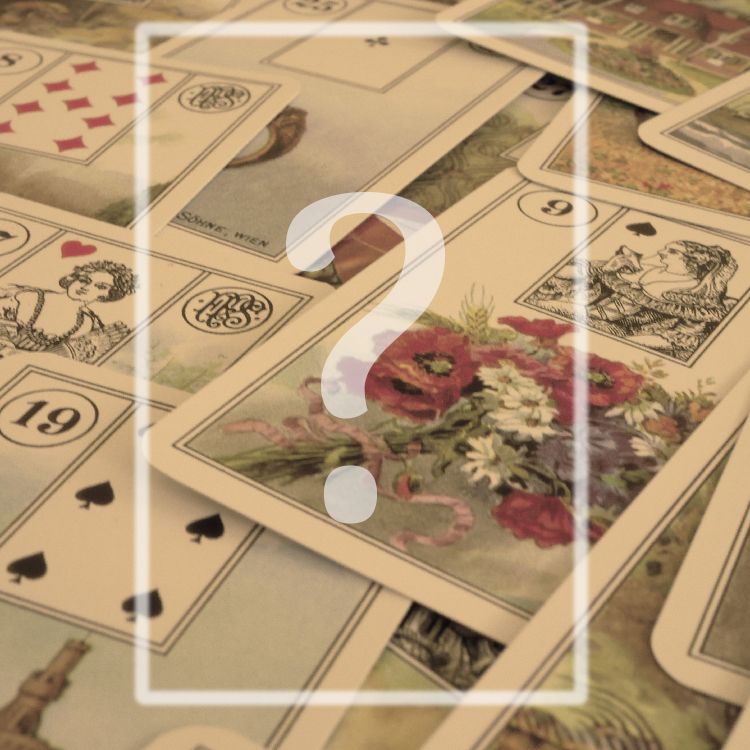
The Petit Lenormand is probably the most fascinating fortune-telling deck inherited from the 19th century. Inspired by the famous Mademoiselle Lenormand, this 36-card deck is known for its amazing ability to predict the future in a concrete and direct way. While other oracles can be vague, the Lenormand gives honest answers to daily life questions (love, work, money).

At first, it is tempting to see the Lenormand as a simpler system than the Tarot. With only 36 cards using clear symbols (a Dog, a Tree, a Key...), it seems easier to learn than the 78 complex cards of the Tarot. However, this simple look hides a clever mechanic. tantei monogatari 1979

To master this deck, learning keywords by heart is not enough. The real power of the Petit Lenormand lies in its unique grammar: The show’s most distinct feature is its shift

  • A language of associations: Unlike the Tarot where one card is sometimes enough on its own, the Lenormand works in pairs or trios. It is the combination of cards that creates the message (ex: Rider + Clover = Good news is coming fast).
  • Strong polarity: The deck has high contrasts with very positive cards (Sun) and very negative ones (Coffin, Cross). The art of the reader is to balance these forces when they meet in the same spread.
  • Symbols with two sides: Even if the images are simple, their meaning can be surprising. The Fox is not just an animal; it is the symbol of "Work" or trickery, depending on the context.

🎁 Too long to read on a screen?

Download the PDF eBook version (80 pages) of this complete guide for free. Included: the 36 classic cards + the 8 bonus cards from the Gilded Reverie + thematic interpretations. Cast and Production The show's supporting cast helped

This guide was created to save you time. You will find below the full meaning of the 36 cards. For each card, I first give you the classic and traditional view (to have solid basics), followed by my modern interpretation from my personal practice, to help your readings flow better.

SURVEY

You and guided meditation

I don't even know what it is, Oops! 😅
I've never done one ... 🙄
I've done guided meditations before 😉👍
I'm not interested in doing any 🤔
I would like to find on this site meditations related to the tarot teachings ☝
Summary

The show’s most distinct feature is its shift from serious drama to wild comedy. Matsuda frequently ad-libbed his lines, leading to a "gag-heavy" atmosphere filled with sex jokes and slapstick. However, episodes often pivot back to a "hard-boiled" or even tragic conclusion, creating a unique emotional gap that fascinated audiences. Cast and Production The show's supporting cast helped ground its wacky premise: as Detective Hattori, a police rival.

For those looking to dive into this classic, the series has been preserved through various releases, including a available from Toei Video .

The series was directed by various luminaries, including and Yasuharu Hasebe , many of whom brought a cinematic flair developed from their work on action films and anime like Lupin III . Legacy and Cultural Impact

, or Detective Story , is a landmark Japanese television series that redefined the "hard-boiled" genre by blending gritty action with surreal, ad-libbed comedy. Airing from September 1979 to April 1980 on Nippon TV, it consists of 27 episodes and features the legendary Yusaku Matsuda in his most iconic role: the eccentric private eye, Shunsaku Kudo. The Unlikely Hero: Shunsaku Kudo

and a white Vespa scooter , which became a cultural icon in Japan. Unique Tone and Genre-Bending

The series follows , a former San Francisco police officer who returns to Tokyo to open his own detective agency in a rundown building. While the character was initially planned as a standard, serious detective, Matsuda’s own rebellious persona transformed Kudo into a stylishly disorganized rebel. His signature look includes: A messy perm and fedora .

and Kahori Takeda as Nancy and Kahori, two girls living in Kudo's building who frequently fuss over him. Mitsuko Baisho as Masako.

Though it ran for only one season, Tantei Monogatari attained . Its influence is still felt in Japanese pop culture, particularly in the archetypes of "cool but clumsy" detectives in anime and drama. Yusaku Matsuda’s performance solidified his place as a superstar before his untimely death in 1989.

CONCLUSION

The simplicity of the Lenormand cards can be deceptive. Following the classical interpretation of the cards, I think that beginners should still do some real learning of the Lenormand system to produce solid and consistent readings.

I hope that with the personal elements I propose for each of the cards, this progression will be facilitated. Feel free to comment and share your own vision of the cards.

Don't leave empty-handed!

Which Lenormand decks to use?

  • The traditional : You can of course use a Lenormand deck, like the Piatnik which I review in this article: Piatnik Lenormand Review
  • The popular : Of course the Ciro Marchetti's Gilded Lenormand is a popular deck, and I review it in this article: Gilded Lenormand Review
  • The outsider : I have an independent game based on the world of piracy which is a very convincing alternative to the standard system, and I review it in this article:'Clear The Deck' Lenormand Review

Learning the Petit Lenormand :

✨ Share your vision of the Lenormand ✨

Each card in the (Petit) Lenormand is a universe of symbols and meanings that intertwine with our own stories. Your personal interpretation enriches the fabric of our collective understanding. Which card resonates the most with you? Do you have a story or a personal interpretation that could shed new light on the mysteries of the (Petit) Lenormand?

I invite you to share your discoveries and stories in the comments below. Your contribution is valuable and can become a beacon for someone else on their path of discovery.

👉 Leave a comment now and let's weave together the Grand Tableau of the (Petit) Lenormand.

To go further, continue your reading with ...

1979 2021 — Tantei Monogatari

The show’s most distinct feature is its shift from serious drama to wild comedy. Matsuda frequently ad-libbed his lines, leading to a "gag-heavy" atmosphere filled with sex jokes and slapstick. However, episodes often pivot back to a "hard-boiled" or even tragic conclusion, creating a unique emotional gap that fascinated audiences. Cast and Production The show's supporting cast helped ground its wacky premise: as Detective Hattori, a police rival.

For those looking to dive into this classic, the series has been preserved through various releases, including a available from Toei Video .

The series was directed by various luminaries, including and Yasuharu Hasebe , many of whom brought a cinematic flair developed from their work on action films and anime like Lupin III . Legacy and Cultural Impact

, or Detective Story , is a landmark Japanese television series that redefined the "hard-boiled" genre by blending gritty action with surreal, ad-libbed comedy. Airing from September 1979 to April 1980 on Nippon TV, it consists of 27 episodes and features the legendary Yusaku Matsuda in his most iconic role: the eccentric private eye, Shunsaku Kudo. The Unlikely Hero: Shunsaku Kudo

and a white Vespa scooter , which became a cultural icon in Japan. Unique Tone and Genre-Bending

The series follows , a former San Francisco police officer who returns to Tokyo to open his own detective agency in a rundown building. While the character was initially planned as a standard, serious detective, Matsuda’s own rebellious persona transformed Kudo into a stylishly disorganized rebel. His signature look includes: A messy perm and fedora .

and Kahori Takeda as Nancy and Kahori, two girls living in Kudo's building who frequently fuss over him. Mitsuko Baisho as Masako.

Though it ran for only one season, Tantei Monogatari attained . Its influence is still felt in Japanese pop culture, particularly in the archetypes of "cool but clumsy" detectives in anime and drama. Yusaku Matsuda’s performance solidified his place as a superstar before his untimely death in 1989.

Subscribe to the newsletter :